
Same market.
Different philosophy.
On The Stage is free to your organization because your patrons pay for it — on every ticket. That math works beautifully for a one-week school show. It works less well when ticket buyers come back twenty times a season. Here’s where the two of us part ways.
On The Stage is genuinely the right choice for a lot of programs.
If you run a K–12 drama program or a summer camp on a near-zero budget — and you want a platform that costs your organization nothing because the fees ride on the patron — OTS was built for exactly that. It’s a strong fit.
If fundraising is the center of your season, their fundraising suite, donor tools, and Broadway-style show pages are legitimately good, and reviewers love them for it.
And their support gets consistently warm reviews — responsive account managers, friendly help. We’re not going to pretend otherwise.
This page is for the other venue. The performing arts center with subscribers. The symphony with a renewing membership base. The regional theater with a donor file, an annual fund, and patrons whose fifth visit matters more than their first. Where the ticket sale is the start of the relationship, not the end of it.
You can’t weigh a fee you’re not allowed to see.
On The Stage doesn’t publish a rate card. The platform is free to you because the per-ticket fee — processing bundled in — lands on the patron at checkout. In low-priced, price-sensitive communities, that surcharge gets noticed.
ThunderTix publishes its pricing. Platform fee and payment processing are separate and visible, and you decide whether the patron covers the fee or your venue absorbs it — per event, not as a one-way default.
From OTS reviews: a multi-year customer noted the added fees raised their ticket prices and drew complaints in a small-town market.
Source — Capterra reviews →What the buyer actually sees
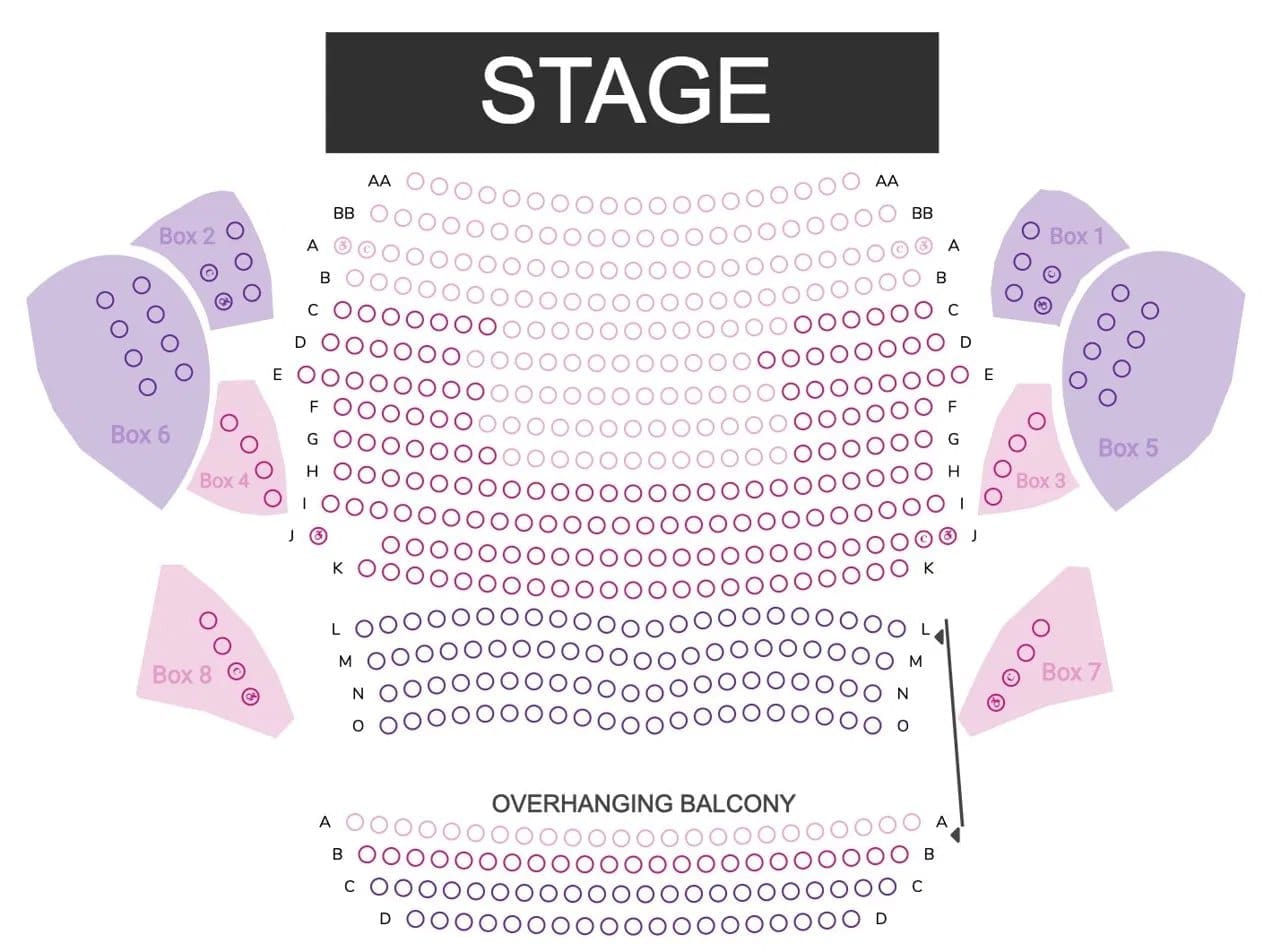
Your seating chart, built by us.
A reserved-seating house isn’t a grid of squares. It’s curved balconies, ADA companion seats, table layouts, obstructed views, and holds. On The Stage hands you the editor and the help videos and wishes you luck.
We build your chart for you — to your actual house — before you ever sell a seat. You approve it; you don’t reverse-engineer it.
From OTS reviews: a 2+ year user’s biggest frustration was building the seating chart — the guides didn’t cover everything, so it came down to trial and error.
Source — Capterra reviews →Reserved seating — a real ThunderTix house
Reports your treasurer will actually accept.
When the board asks for deferred revenue on season packages, or your bookkeeper needs sales mapped to GL codes on a cash or accrual basis, “export to CSV and sort it yourself” isn’t an answer.
ThunderTix carries accounting codes, venue-wide and per-event GL mappings, a cash/accrual toggle, and deferred-revenue handling for packages and flex passes — built in, not bolted on.
From OTS reviews: customers have asked for more efficient, updated reporting out of the platform.
Source — Software Advice →Revenue by GL account
Deferred package revenue recognized per performance — not all at the sale.
Know who’s about to lapse — before they’re gone.
A ticket-sale record tells you what someone bought. It doesn’t tell you that your best subscriber of nine years hasn’t renewed and is three weeks from drifting away.
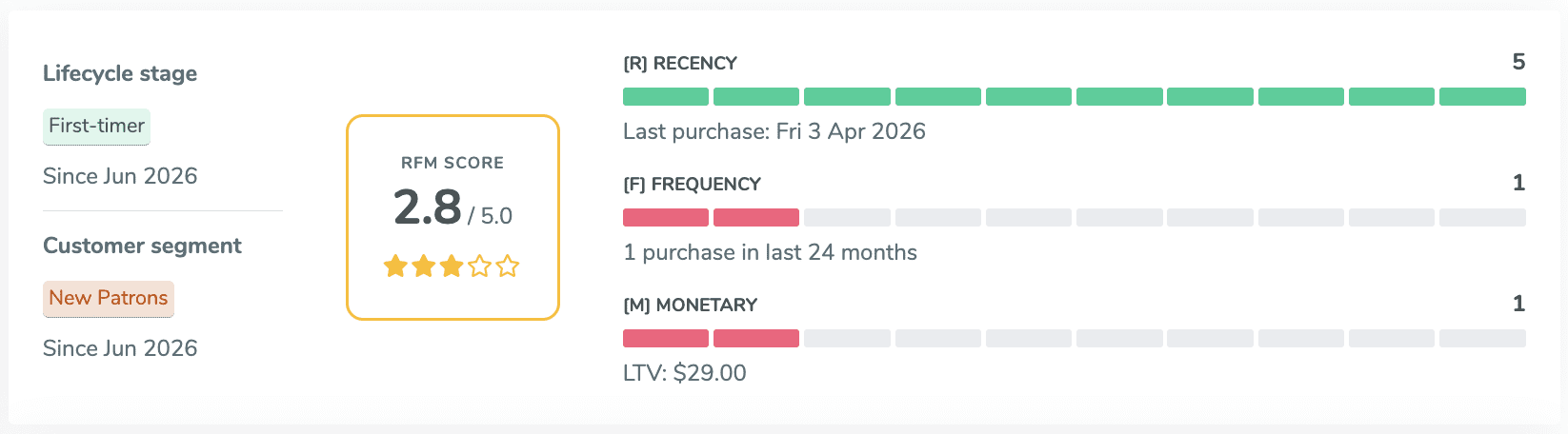
ThunderTix scores every patron with RFM and an eight-stage lifecycle — Prospect through Won-Back — so your win-back email goes out while it still matters. No competitor in this segment ships this natively. On The Stage doesn’t.
RFM & lifecycle — a real ThunderTix patron
The patron file is yours — and reachable.
OTS users have wished for database integrations that don’t require third-party software, and called the social side clunky. When your data only moves through someone else’s glue, you don’t fully own it.
ThunderTix gives you a versioned REST API and first-party (CAPI) attribution with hashed PII — clean pipes into your CRM, your ad platforms, your warehouse, on your terms.
From OTS reviews: a customer wished for database integration that didn’t depend on third-party software.
Source — Capterra reviews →GET /api/v2/patrons
Ask your box office anything.
ThunderTix ships an AI assistant — and an open MCP connection — so you (or your tools) can ask plain-English questions of your own data and get real answers back. Not a chatbot that deflects to a help article.
On The Stage offers a MailChimp hand-off. ThunderTix lets you ask the question directly.
Not On The Stage. Not Ludus. Just us. Today.
Built for venues where the patron relationship outlasts the ticket.
No sales call, no demo gate — see pricing and get set up in minutes.